When Yule and Imbolc Meet
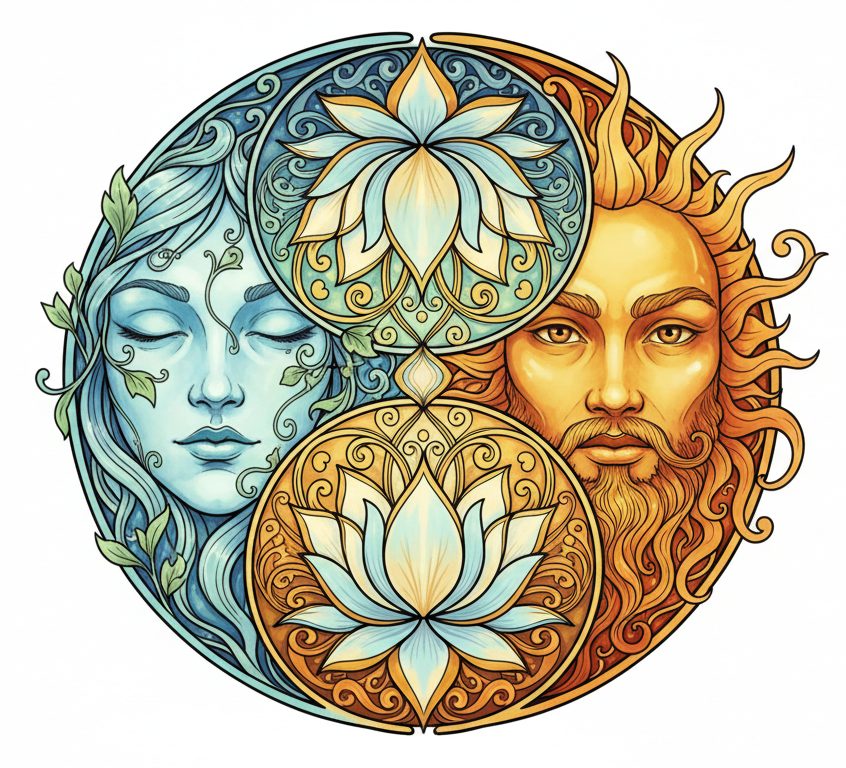
When Yule and Imbolc Overlap: How It Happens, When It Last Happened, and Why It’s Rare
Most people don’t know this, but Yule was originally a lunar festival, not a fixed date on the colonial calendar. In the old Germanic and Norse timing system, Yule begins on the first full moon after the first new moon following the winter solstice. Imbolc is solar, marking the midpoint between the solstice and the equinox, usually on February 1-2. Because one is lunar and the other is solar, they only coincide in rare years.
The Most Recent Confirmed Overlap Before 2026
According to the lunar rule, the last time Yule fell on February 1-3, overlapping with Imbolc, was in 2007.
- Winter Solstice: December 22, 2006
- First New Moon after Solstice: January 19, 2007
- First Full Moon after that: February 2, 2007
That full moon is Old Yule. February 2 is also the solar midpoint, Imbolc. So, 2007 is the last confirmed Yule-Imbolc convergence before 2026. The next one after 2026 will occur about 19 years later, around 2045, because the moon follows a 19-year Metonic cycle.
Why It Happens
For Yule to land on February 1-3, three things must align:
-
A late new moon after the solstice. If the first new moon after the solstice falls in mid-January, the full moon will naturally occur in early February.
-
A full moon around February 1-3. That full moon is Yule.
-
Imbolc around February 1-2. Imbolc always falls around February 1-2, so if the full moon occurs on those dates, the two festivals overlap. This only happens when the lunar cycle is unusually late in relation to the solstice.
How It Can Be a Near Miss
A year can come very close to overlapping without fully doing so. There are two ways this can happen:
-
The full moon occurs on January 30-31.
This places Yule just before Imbolc. It feels similar, but technically they don’t overlap. -
The new moon after the solstice occurs too early.
If the new moon is in late December or early January, the full moon will fall in mid-January, too early to coincide with Imbolc. These “near miss” years still feel like the same seasonal hinge, but they don’t meet the strict lunar rule.
Why This Matters
When Yule and Imbolc overlap, it creates a rare moment when the end of the dark tide, Yule, and the first spark of returning light, Imbolc, happen together. It’s a significant point in the year, a moment when the old lunar calendar and the solar agricultural calendar sync. It happened in 2007, it happens again tomorrow, and it won’t happen again for nearly two decades.
What This Means in Neo-Pagan Terms
-
The Goddess is at Her peak (full moon). She is the Winter Mother, the Keeper of the Hidden Flame, the one who carries the old year’s wisdom.
-
The God is awakening (Imbolc). He is the Young Sun, the Seed-Child, the spark of life beginning to rise again.
-
Their tides overlap. Instead of the usual cycle, with the Goddess full at Yule and the God stirring weeks later at Imbolc, they arrive together.
This creates a moment of:
- union
- balance
- shared blessing
- double consecration
- a hinge where dark and light breathe in unison